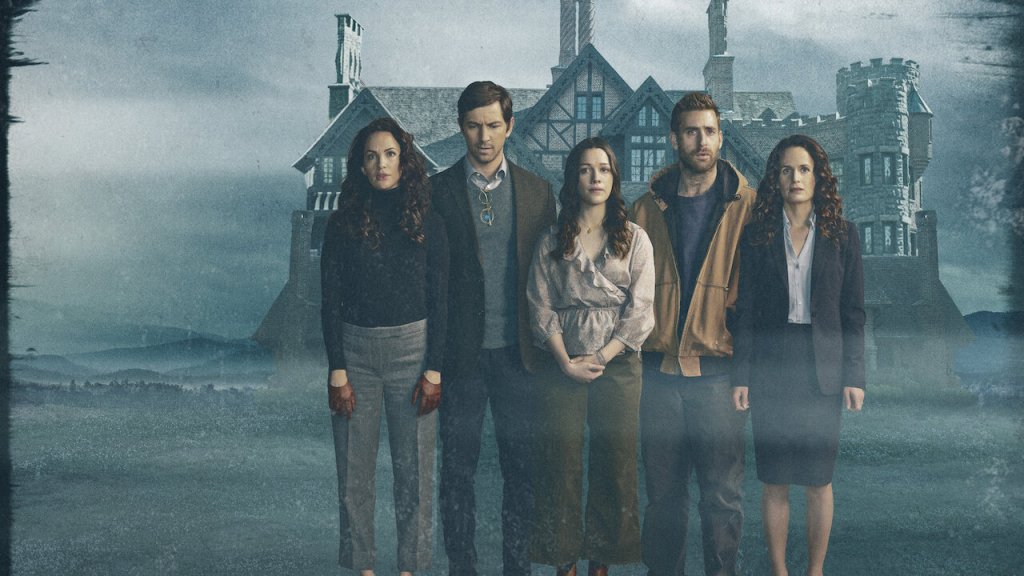
Loosely based on Shirley Jackson’s seminal novel of the same name, The Haunting of Hill House was released on Netflix on October 12th 2018, five years prior to this post being conceived, written, and published.
I’ve seen the show through four times (five including the refresher I’m doing in conjunction with writing this), and each time it has been a punch to the gut and one of the most compelling experiences I’ve ever had with a piece of media. It stays with me long after each rewatch and I feel as though it has become a core part of my personality.
I wasn’t familiar with the source material or any prior adaptations of it before watching The Haunting of Hill House, and I knew absolutely nothing going into it for the first time, so imagine my surprise when I come out the other end, ten episodes later, feeling like a changed person. Fundamentally, The Haunting of Hill House delves extremely deeply into a lot of emotionally complex topics: shared trauma, guilt, grief, addiction, and familial rifts just to name a few, all replenished with Mike Flanagan’s now-signature balance of skin-crawling horror and beautifully-written emotional dramatics.
The show explores the Crain family across two separate timelines: the summer of 1992 during their stay at the titular Hill House, and 2018’s present day timeline where the effects of that fateful summer are still being felt deeply by each member of the family. Brought together by a horrific tragedy, the Crains must reckon with everything they experienced twenty-six years previously and work together to unlock the secrets of Hill House and thus confront the trauma that has haunted them all this time.
Sounds good, right? Whatever you’re thinking, it’s even better.
I’m a firm believer in the fact that horror works best almost as a sub-genre of sorts, not to be relegated to the background, but as a supplement to the characters and story already at play. If I think about my favourite horror works of all time, they’re almost always of this ilk, and they’re almost always about a splintered family or exploring grief. I think of Hereditary, which has all the ingredients to be a spiritual cousin to Hill House. I think of Possession, in which horror lurks beneath a gruelling divorce story. What both Ari Aster and Andrzej Żuławski accomplish is the utilisation of horror themes and imagery to reinforce the story already in play, not rely on it to tell the story. Of course, there are exceptions to this, but I find myself most at home with horror when there’s something else in the mix.
And for Mike Flanagan, that is usually a startlingly well-written set of characters, a cast who are firing on every possible cylinder, and an emotionally resonant narrative that leaves you in tears after a series of stunning monologues that any writer (myself included) would sell their soul to write just one of. Flanagan has several and they’re always used perfectly within their own right. Midnight Mass (which will be covered in greater depth by Maddy) is perhaps a more striking example of this, but Hill House definitely has a few aces up its sleeve in that department.
In order not to spoil the secrets of Hill House for those who haven’t had the luxury of seeing it for themselves, I’ll keep plot details brief and rather talk about what makes Hill House shine and avoid the traps of just becoming another haunted house horror story.
The characters at the heart of the story are really the key ingredient to why I feel so attached to this series; the Crains, despite the heightened horror-drama at the core of the show, feel like such a realistic portrayal of what families can be, and all of the separate relationships feel authentic, from the bitterness evoked from the family’s two oldest siblings, Shirley and Steve, to the indelible twin bond that Nell and Luke share with each other. Each dynamic is given room to breathe in both timelines, to the point where you feel like you’re just along for the ride with them, and you’re sat there wishing your family would stop bickering. This is never more apparent than in Episode 6, Two Storms, and if you haven’t heard about this one, I would be very surprised. This is the informal opener to the back half of the series, after the five siblings have had their focused episodes and all the building tension comes to a head with one of the most stunning episodes of television ever created. A script that beautifully balances its tones, camerawork that isn’t just fancy for the sake of it, it actually creates a visual language to complement the writing, and the actors all doing some of their best work across the entire show.
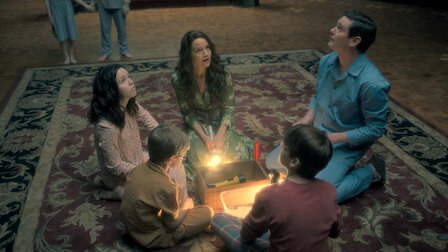
I would be remiss to talk about the show and not mention the ensemble of terrific actors that Flanagan and the casting team assembled. With a slew of both recognisable names and rising stars, Hill House boasts a wealth of talent across the board. (This section is going to be meandering and filled with superlatives about each other of the cast members, but I feel as though each one of them deserves their flowers so buckle up). The fact that not a single Emmy nomination was given to Hill House is nothing short of criminal, but especially the phenomenal actors who deserved every award under the sun.
When you’ve got a litany of talented younger actors as I’m going to list below, you need a strong and steadily-cast parental unit to ground them, and Hill House pretty much hit the jackpot in that regard. Henry Thomas and Timothy Hutton both play Hugh Crain across both timelines, while Carla Gugino (a Flanagan favourite, and I can see why) plays Olivia Crain. Thomas and Gugino hold down the fort during the Hill House days in 1992, while Hutton steps in for the present day timeline. I won’t mince words: the casting here is nothing short of perfection.
Carla Gugino is able to pull off a miracle with her portrayal of Olivia Crain and she is so incredibly convincing in all of her confusing emotions that she creates this confusion within the audience, putting forth such an emotionally resonant display and firing off some tricky monologues with a grace that is a rarity to achieve. I could go on all day about her performance, but it’s best witnessed for yourself to see what I mean, otherwise I’d hit spoiler territory.
Henry Thomas and Timothy Hutton are the best example of a dream team who never get to work together. Thomas’ Hugh has a lot more of the charismatic energy during the summer spent inside the walls of Hill House, while Hutton achieves the anguished gravitas while dealing with the after-effects. They both get to play off Hugh’s love for his family, though Hutton has the monumental task of conveying decades worth of unspoken history with little more than some throwaway lines of dialogue and his clever facial expressions. Henry Thomas, though, happens to provide two of my absolute favourite moments of the show, some acutely chosen line deliveries that just leave me feeling cold and chilly (in the best way). I won’t say more due to potential spoilers, but both actors do some solid work here.
The eldest Crain sibling, Steven, is played by Michel Huisman of Game of Thrones and The Age of Adaline fame. Huisman isn’t done any favours by his character, written to be the least likeable of his family by design, but Huisman at least manages to make it more difficult for the audience to outright dislike him. I don’t particularly love Steven like I do the rest of the family but, thanks in part to Huisman’s measured, patient performance which unlocks deeper meaning with every rewatch I’ve done, there are layers to Steve that aren’t outwardly apparent on the page. Huisman is able to channel the skepticism of the supernatural elements while shouldering the burden of being the eldest sibling during that summer. And the work he does in Episode 10…genius.
Elizabeth Reaser, a Blueprint favourite for her recognisable work as Esme Cullen in the Twilight saga as well a whole host of other projects, turns in career-best work as Shirley Crain, the eldest daughter of the family and the pragmatist of the siblings. Shirley owns and operates a funeral home, and also acts as something of an interim matriarch for the rest of her siblings, always helping out when they need her despite feeling like she is being taken advantage of by them. Reaser is able to perfectly balance Shirley’s hard-headedness with her empathetic nature, allowing to come across as both kind and callous in the same beat. Reaser perhaps doesn’t get a lot of ‘show-stopping’ moments compared to the rest of her cast, but when does get to be the focus of the moment, she does not disappoint, traversing probably the trickiest character with relative ease.
The middle Crain sibling, Theodora, is embodied by Kate Siegel, another Flanaverse regular (and Mike Flanagan’s wife, power couple for the ages). Siegel delivers an unforgettable performance as Theo, traversing a complicated and, at times, impossible character arc with easy access to her gigantic emotional range. There’s a particular moment in Episode 3 where Theo realises the circumstances surrounding a patient of hers through use of her supernatural sensitivity and Siegel masterfully conveys every single step in the process of her discovery. The confusion, the shock, and the eventual gut-punch that comes with what is happening. Her previously hardened persona cracks for the very first time and we’re exposed to the huge, raw pain that crawls underneath Theo’s gloved skin.
The eldest of the Crain twins, Luke, is played by Oliver Jackson-Cohen, also tapped by Flanagan to appear in The Haunting of Bly Manor. He doesn’t quite get a great deal to do until Episode 4 and Episode 6, but as soon as makes his mark on the show, it’s easy to devote your time and attention to making sure that Luke is okay. Jackson-Cohen has an intelligent way of portraying vulnerability without playing it too weakly or whimperingly, and it is one of his greatest assets in his embodiment of Luke and in particular his struggles with addiction. The audience is quickly endeared to Luke, even when you’re being told about all the unkind things he has said and done to his siblings.
2018 saw the wider world introduced to Victoria Pedretti, and what a stunning find she was. Pedretti imbues Nell Crain with such inescapable joy in the moments she can find them that it’s nothing short of gut-wrenching when she flips the script and lets the audience be privy to her unbridled agony. I’d go so far as to say that Nell is the beating heart of the show and Pedretti’s delicate, anguished performance accentuates this, grasping hold of the audience in the show’s very first episode and not letting go until the very last. Episode 5 is a showcase for her for sure, as it finally reveals one of the show’s building mysteries which is the catalyst for the back half of the series, and Pedretti sets up the dominoes perfectly with her talent.
The child cast is also worthy of ample praise here. Paxton Singleton, Lulu Wilson, McKenna Grace, Julian Hilliard, and Violet McGraw took on the roles of the Crain children and the casting has to once again be commended. They all lay the foundations for what the older versions of the characters have gone through, and every foundation is solid and really gives you more clues about exactly why the characters are so traumatised as adults. The pure feeling of childhood fears is so aptly drawn on in every haunting sequence and are so perfectly played by all of the kids (shoutout to Julian Hilliard’s perfect little scream during the dumbwaiter scene).
So now that I’ve used every superlative under the sun, I’ll talk a little about why and how all of these parts come together to make the well-greased machine I’ve come to know so well.
Hill House uses its eerie backdrop as a propeller to tell the story Flanagan wants to tell, keeping the house itself quietly lurking in the periphery of your memory for when it wants to jump back around and scare the living daylights out of you. The beautifully designed house itself does some heavy lifting to nail the spooky atmosphere that works so well. The many hidden ghosts throughout the building conceal themselves in the shadows of each scene, working with the glacially gliding camera movements to reinforce that sense of dread that comes with a haunted house.

There’s a lot of substance to the way the show is structured, too. Sequences are sometimes told multiple times when the audience has access to new information that completely recontextualises what you thought you knew. Even some jump scares aren’t what you think at first sighting. I still learned some new key facts about the story in my fifth viewing, which I think is pretty neat.
Flanagan treats both big and small moments with the same amount of impact. A scene of young Luke counting his toy soldiers can hit as hard as the scene where you finally learn what’s going on in the final episode. Underscored by the delicate piano scoring that deftly taps a deeper emotional complexity into each scene, the big moments hit like sledgehammers, each one perfectly and pointedly considered by Flanagan’s direction and the edit work in each episode.
While I have a huge love for this show, like any show, it’s not quite perfect. There are some things I have issues with, such as Episode 9’s understandable yet frustrating detour into the Poppy Hill character (played flawlessly by Catherine Parker though). While it does give some crucial insight into Olivia’s mind and plays a part in some of that re-contextualising I was talking about earlier, it comes as such an important part of the series, and for it to lead in the final hour when time could have been perhaps spent elsewhere, instead of trying to work out what a ‘screaming meemie’ actually is. Still, the sequence are well-made and have some important story considerations, so I can’t be too mad at it.
That’s pretty much for gripes, and that’s basically the tiniest of nitpicks based off my desire to always be spending more time with the Crains and trying to understand them. One small issues is fairly good going, especially for a genre piece with a very specific tone.
The Haunting of Hill House might not be for everyone, but for those it works for, and it really works for, you’d be hard-pressed to find something that does what it does better. It introduced me to Mike Flanagan and what a way to have done that. I wasn’t the biggest fan of The Haunting of Bly Manor (though I’d watch Victoria Pedretti in literally anything) but Midnight Mass really gripped me. Writing this has made me even more excited for The Fall of the House of Usher, and I’m extremely ready to be sucked into another incredibly tense, deeply emotional Mike Flanagan world.
If you come out the other side of this deconstruction and still don’t think Hill House is for you, I’d urge you to at least watch the first episode. If it’s still not for you, try Midnight Mass. If that doesn’t work, I don’t know what to tell you.
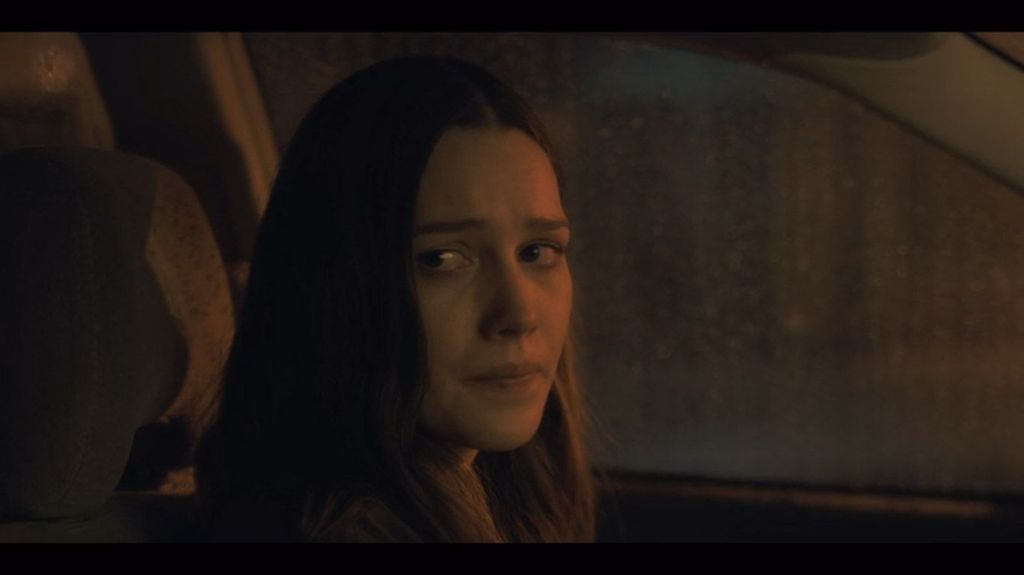
I’m going to end this post by leaving you with the extended quote from the post’s title and one that I think sums up what Hill House is trying to do. Put aside all the scares, all of the hidden ghosts that terrorise the periphery, Hill House moves with love first and foremost. While familial bonds can be tricky and frayed, home is always where the heart is. As long as that home is NOTHill House, thank you very much. In Episode 10, in a moment when you’ve finally assembled most of the pieces of the ticking-clock mystery that is Hill House, Nell Crain says this:
“Forgiveness is warm, like a tear on a cheek. Think of that, and of me, when you stand in the rain. I loved you completely, and you loved me the same. That’s all. The rest is confetti.”
The Haunting of Hill House can be found on Netflix.
The Fall of the House of Usher drops October 12th on Netflix worldwide.
 the blueprint.
One thought on ““The Rest is Confetti” – The Magic of Mike Flanagan’s ‘The Haunting of Hill House’”