Be Not Afraid
Mike Flanagan’s fifth and final series for Netflix is officially now streaming worldwide, and after Blueprint co-editor Jamie recently revisited The Haunting of Hill House, Madeleine is now here to revisit her personal favourite of the Flanagan show line up: Midnight Mass.
Released in September of 2021, the limited series follows a disgraced young man who returns to his isolated island hometown he once served as alter boy in; where the arrival of a new priest sees the community experience miracles and horrors.
Across its seven episodes, Midnight Mass explores faith in both the gain and loss of it; second chances; the complex interpersonal lives of a tiny community; gothic supernatural horror; and all with a steady descent into wicked, gory, terror on a literal biblical level. It’s an expertly crafted and phenomenally written show with unforgettable performances.
As an altar boy raised Catholic himself, this is a story that Mike Flanagan had always wanted to make – indeed, he foreshadowed it in two of his past films: 2016’s Hush as the protagonist’s own novel, and then again in 2017’s Gerald’s Game.
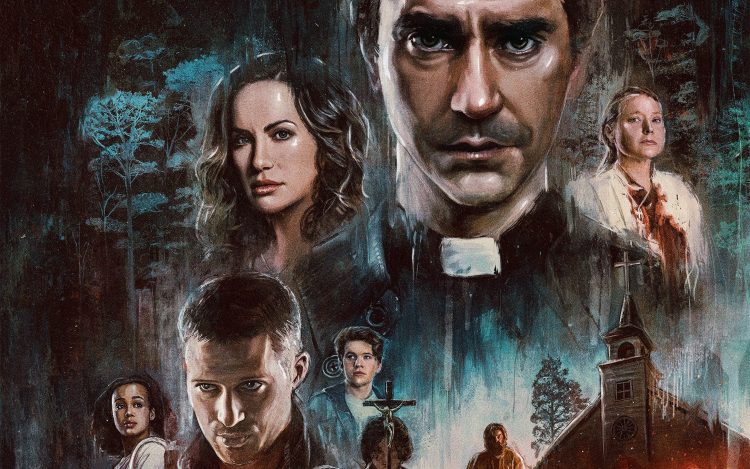
Of his five series now on Netflix, Midnight Mass is the sole entry not to be adapted from an original source material, and is instead all Flanagan’s own original concept and writing. And it’s easily his most impressive work as a writer: he builds a vastly interesting, compelling narrative within a sea of complex characters who each bring their own unique perspectives to flavour the multidimensional story.
The way it unfolds across its seven episodes walks the line between high-brow and edge-of-your-seat gripping beautifully, and the sudden shock to alter course two thirds through is one of the ballsiest moves I’ve ever seen in a mini-series. I’m cautious to delve into too much detail, as the surprises this show has to offer is most definitely one of its greatest assets, but the supernatural edge is so grounded that it seems wholly plausible. It draws fascinating comparisons with direct text from the Bible itself in a way I had never considered, that wildly impressed me.
If you’re a fan of a Mike Flanagan monologue, then this is the magnum opus. The majority of characters here get their moment to speak from the heart for minutes long, often in unbroken takes, that allows a real, isolated look into their perspective. Occasionally it can feel a little “spotlighty”, for lack of better word, and while they’re not my personal highlight of the show as a whole it brings an undeniable beauty and poetry to the show that, paired with the horror, gives a remarkable juxtaposition in the viewing experience.
In both concept and execution, this is by far the most effective Catholic horror since The Exorcist.
While faith is understandably a complex and controversial topic, Midnight Mass is inquisitive, not judgemental in its approach, and explores the horrors of organised religion and the beauty of faith in equal measure. In terms of the horror element, it’s one of the most interesting and compelling portrayals on a classic villain I have ever seen – and in the over-saturated genre, a fresh take on a known concept is incredibly rare. It fascinates me, and it’s very difficult to not write about in this spoiler-free article. Watch it, and slide into the Blueprint DMs, please.
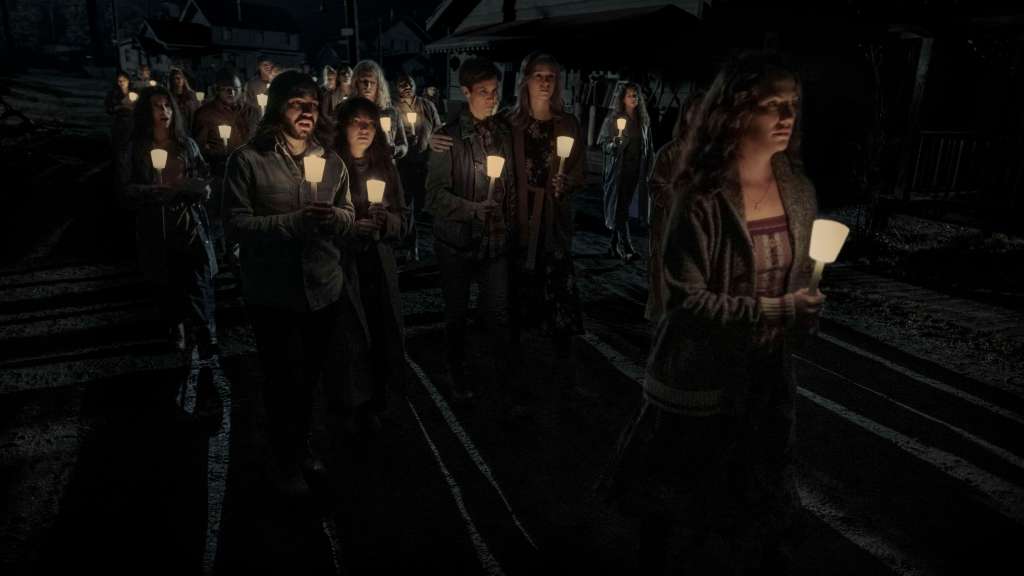
Though it does contain the occasional jump scare (though none as bad as Hill House’s infamous car scene), the horror here is more so a gradual slippery slope into terror and mayhem than all out terror, creating a slow burn that seeps under your skin before it explodes in front of your eyes. Some may believe it’s a slow starter, but it’s one that is more than worthy of your time
Predominantly, this is undoubtedly Mike Flanagan’s masterclass in an ensemble cast of characters.
Each character on this small island is fully realised with clear complexities to them, their personality and their background, without it seeming like a collection of character profiles. Together, the head-butting of personalities would be at reality television levels of entertainment were they not all so rooted in reality.
Riley Flynn (which must be a thinly veiled Buffy reference, no?) is our protagonist, the aforementioned disgraced young man. Zachary Guildford gives a stunningly weighted performance as a man haunted by what he knows he is never coming back from. It’s a very nuanced and grounded performance, to the degree it’s often overlooked in discussion of this show, but I urge you to recognise the skill and subsequent effect of it.
Kate Siegel is the beating heart of the show as the good-willed and innocent Erin, the childhood sweetheart of Riley and also a recent returnee to the island. A survivor of her own life struggles, she’s deliberately leading her new life with a calm and centred attitude that makes her the calm and centred figurehead of the show. Flanagan often puts his real life wife in prominent roles, but it’s impossible to argue why he shouldn’t – she’s a true tour de force that an audience naturally gravitates toward.
Samantha Sloyan serves as delightfully hateable antagonist Bev Keane, the school administrator with an overly prominent role in St. Patricks who is seemingly cut from the same cloth as Nurse Ratched. Sloyan steals almost every scene she’s part of as this sly and insufferable woman who oversees the community with a puritanical judgement from her self-appointed holier-than-thou pedestal – it’s exceptional work.
Each and every actor provides notable impact with their character, but I can’t not mention the following specifically: Rahul Kohli gives a gracious and levelled performance as a man trying to make a just difference and remain true to his faith despite the small town mindset coming at him from all angles; Henry Thomas and Kristin Lehman pack their own subtle punch playing loving but struggling parents to an adult who’s fallen from grace; Robert Longstreet as Joe Collie adds a pained edge as the ‘town drunk’; and Sarah Gunning plays the voice of reason as the town doctor caring for her ailing mother with beautiful poise and tenacity.
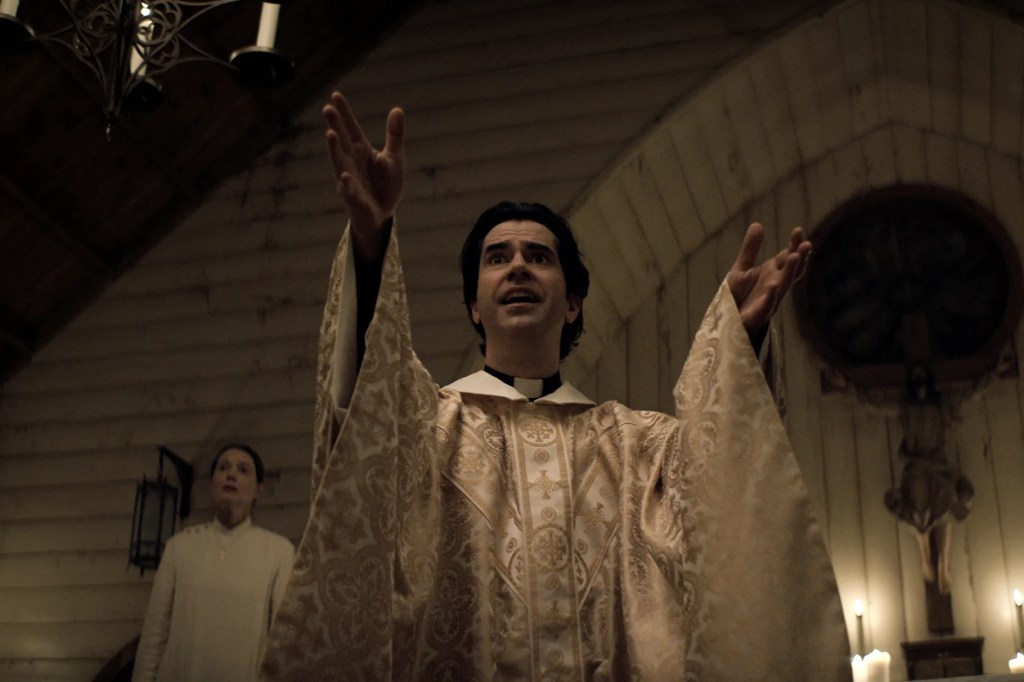
However, the cast, and indeed, the show itself, is anchored undoubtedly by Hamish Linklater as supposed newcomer to the island, Father Paul. It is easily one of the greatest performances on television in recent years, and widely underrated as such. Linklater is so quietly charismatic and undeniably charming, yet somehow simultaneously definitely not safe. From his passionately delivered sermons that genuinely rope you in with partial belief, to his subdued one on one conversations, he is a true force to be reckoned with.
Even if the story was nothing to write home about, the technical aspects of this show would be: it’s shot and coloured beautifully by cinematographer Michael Fimognari, all almost entirely in this one small village of beautiful sets. It was shot predominantly during the first year of covid, and perhaps it’s coincidental, but it’s as if Flanagan used that to aid the isolation of the piece. All this is accompanied by a haunting score of sporadic strings by musicians The Newton Brothers, that work in tandem with the jump scares to ensure your heart really does fall out your stomach.
I adored The Haunting of Hill House, and was blown away when Midnight Mass managed to surpass it in my eyes. It has it all, in a rare and raw authenticity; huge horrors; exceptional characters and performances; and enormous moments of sincerity that have you pondering the biggest questions in life in a beautiful, unflinching light whilst being enthralled in a genuinely great story.
Midnight Mass is a masterclass in writing and acting that gets more impressive with every rewatch. It is Mike Flanagan above and beyond his best, and I cannot recommend it, or stress my love and admiration for it, enough.
Midnight Mass is on Netflix
The Fall of the House of Usher is now streaming on Netflix
 the blueprint.